This is not a critique of individual resilience, but an examination of how organizational design shapes career outcomes over time.
There is a familiar arc many of us recognize when we look back on our UX careers.
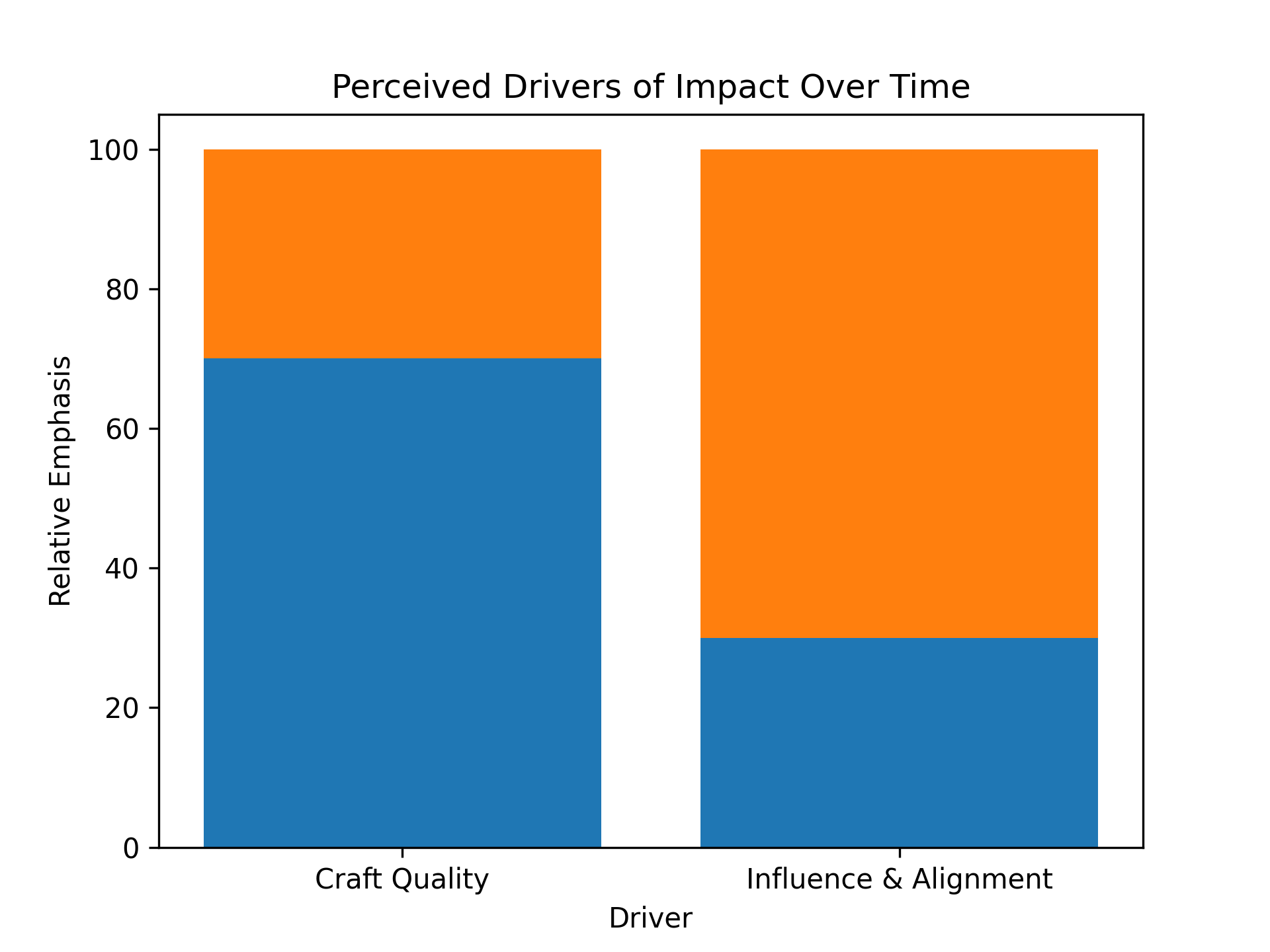
Early on, we believe good work will speak for itself. We focus on craft. We hone our methods. We trust that rigor, care, and thoughtful design will naturally translate into influence.
Later, something shifts.
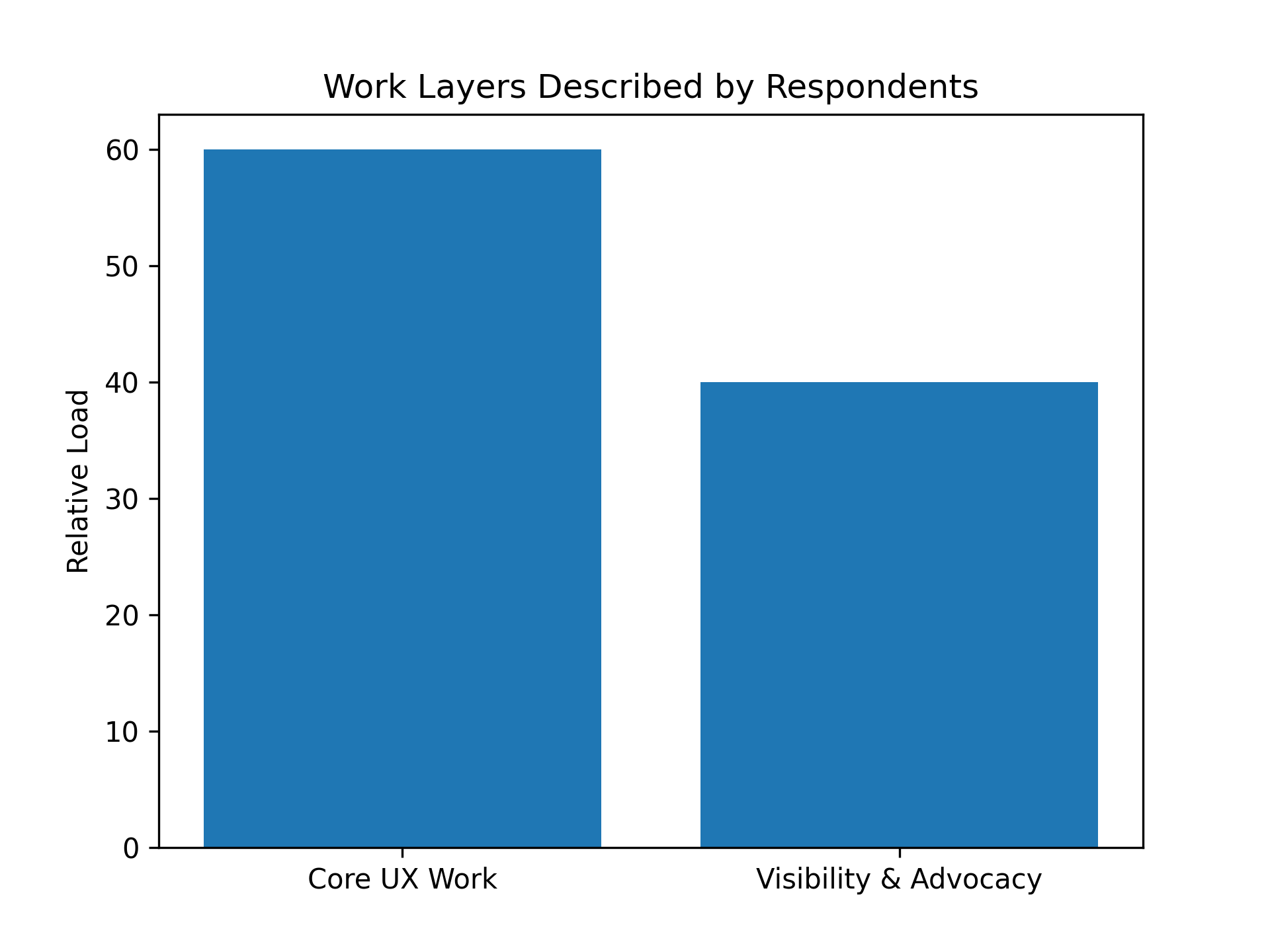
The work is still strong, but decisions do not always move. Research is acknowledged, then bypassed. Designs ship, but not always as intended. Promotions arrive, sometimes paired with less satisfaction than expected. We begin learning skills that were never in the original job description: how to frame, how to align, how to influence without authority, how to read a room.
Over time, many of us describe this as growth. As maturity. As career progression.
What if much of what we call advancement is actually adaptation?
And what if the cost of that adaptation has been absorbed by individuals rather than designed for by organizations?
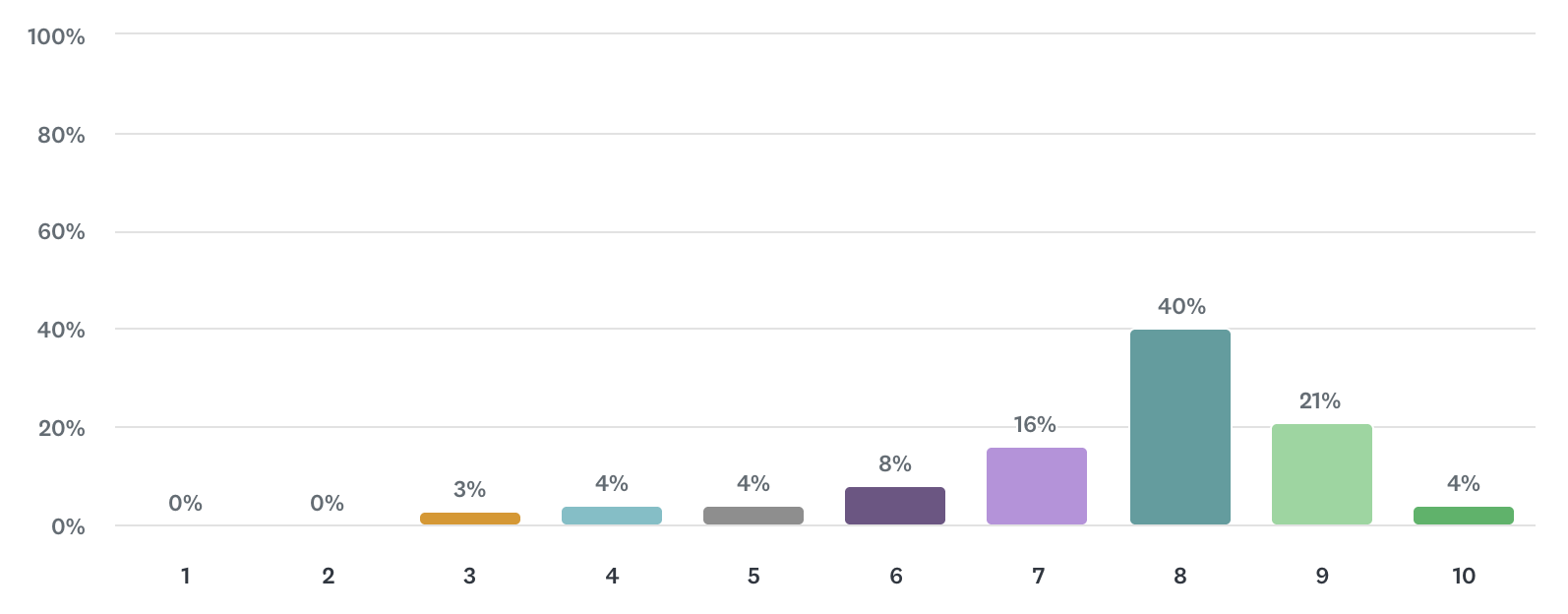
Study snapshot: 113 practitioners surveyed. 80% with 6+ years of experience. Roles spanning individual contributors to executives. Median career satisfaction: 8 out of 10
The Pattern Beneath the Patterns
Across career stages, roles, and years of experience, one signal came through with surprising consistency: regret clustered around inaction, not mistakes.
“I should have spoken up sooner.”
“I waited too long.”
“I did not advocate for myself enough.”
What stands out is when these regrets appear.
They rarely follow reckless decisions or obvious missteps. They appear after long stretches of navigating unclear expectations, shifting priorities, opaque promotion paths, and organizations that were never quite ready to act on UX insight, even when they agreed with it.
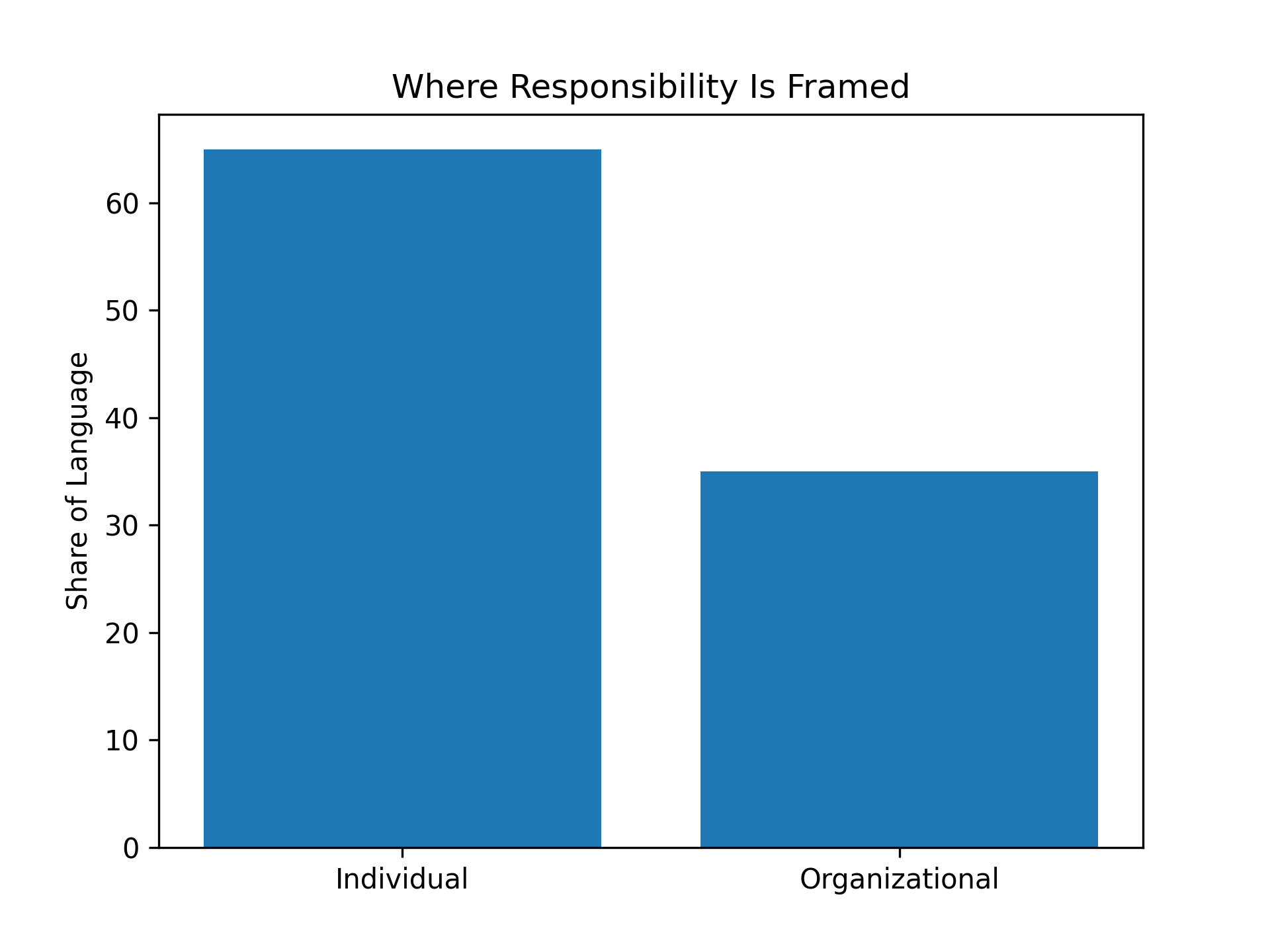
And yet, the responsibility is framed inward.
Even when respondents describe structural constraints (lack of authority, missing stewardship, leadership indifference), the conclusion often lands on self-correction rather than systemic failure.
This is not a confidence problem. It is a meaning-making one.
When outcomes are ambiguous, we look for the lever we could have pulled differently. That instinct is deeply human.
But in tech, and especially in UX, it gets amplified.
Tech Externalizes Uncertainty. People Internalize It.
Technology organizations are exceptionally good at moving forward without fully resolving uncertainty.
UX work, by contrast, introduces pause. It asks questions. It surfaces discomfort. It makes tradeoffs visible.
When those two forces collide, something subtle happens.
Uncertainty is externalized as the nature of the industry.
Responsibility is internalized as something I should have navigated better.
Careers become self-directed not because people crave autonomy, but because stewardship is inconsistent. Visibility becomes prerequisite labor, not a byproduct of impact. Influence becomes something to earn repeatedly, rather than something structurally supported.
Fewer than half of respondents agreed that they intentionally plan their career path, suggesting many practitioners are navigating without a clear map.
Over time, practitioners adapt.
They learn when to push and when to soften. When to speak and when to wait. How to translate insight into something palatable enough to survive momentum.
This adaptation is often framed as professional growth. But adaptation is not the same thing as advancement.
Advancement increases structural leverage. Adaptation increases personal effort. One shifts power. The other shifts burden.
Why UX Feels Especially Heavy
Here’s what I keep coming back to. UX sits at an uncomfortable intersection.
Close enough to decisions to feel responsible. Far enough from power to hold final authority.
Designers often feel impact erosion in real time, watching work change as it moves through delivery. Researchers often feel it after the fact, seeing insights acknowledged but not acted on.
Different pain points. Same structure.
In both cases, effectiveness depends not just on expertise, but on relational labor: translating, aligning, regulating, smoothing.
This labor is rarely named. Almost never rewarded. And once normalized, it becomes invisible, treated as baseline professionalism rather than real work.
“Early on I thought being good at the work was enough, but I learned that influencing decisions mattered more.”
That quote resonates not because it is surprising, but because it is so widely experienced. Most practitioners arrive at this realization alone, without anyone naming it as a structural shift.
Satisfaction Can Coexist With Uncertainty, and Still Be Costly
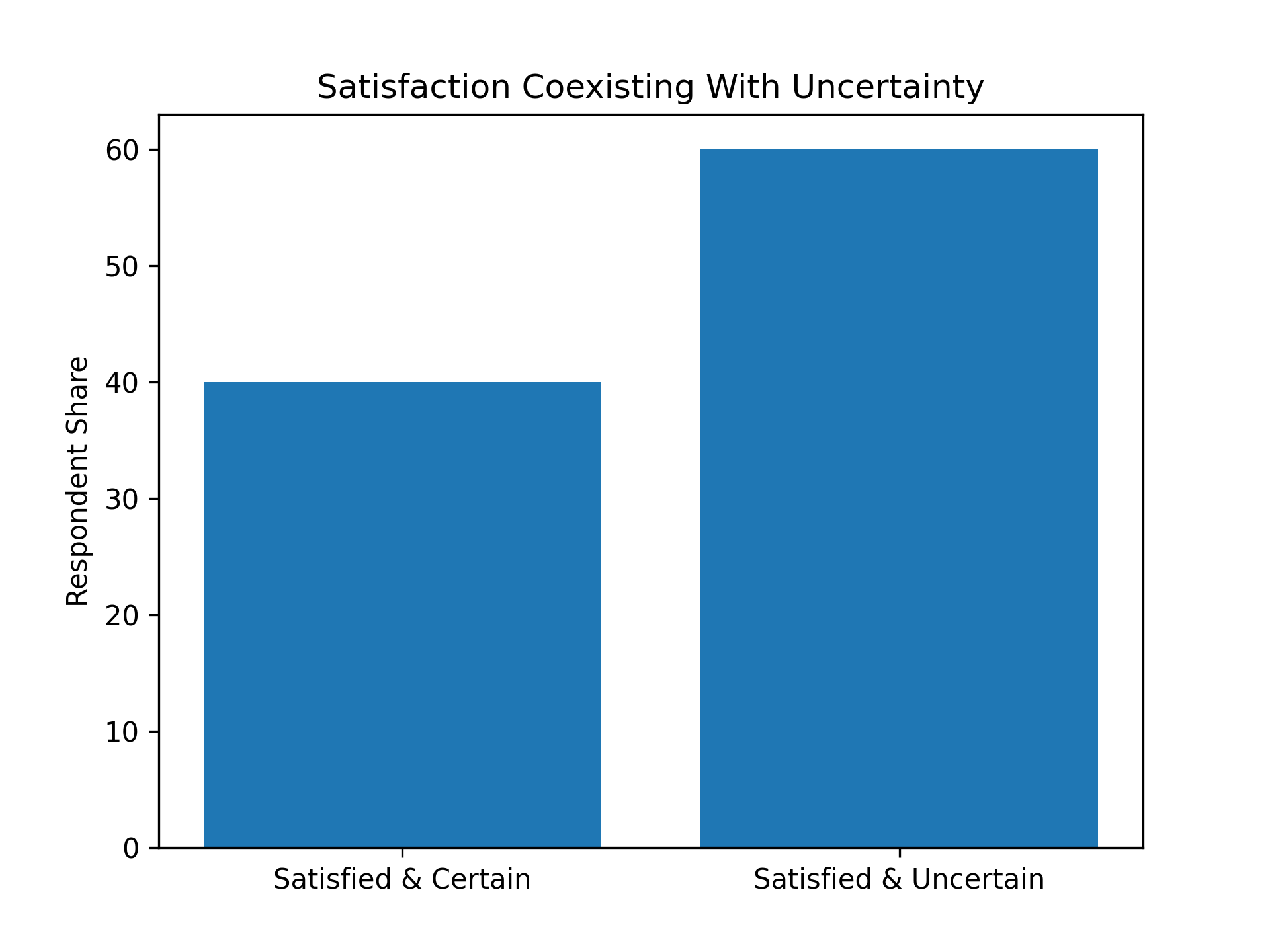
Here’s a finding I keep sitting with: many respondents report being genuinely satisfied with their work and deeply uncertain about the future.
This is not denial. It is adaptation.
81% of respondents who provided satisfaction ratings scored 7 or higher. Yet among those same high-satisfaction respondents, half expressed uncertainty about whether their career had progressed as expected.
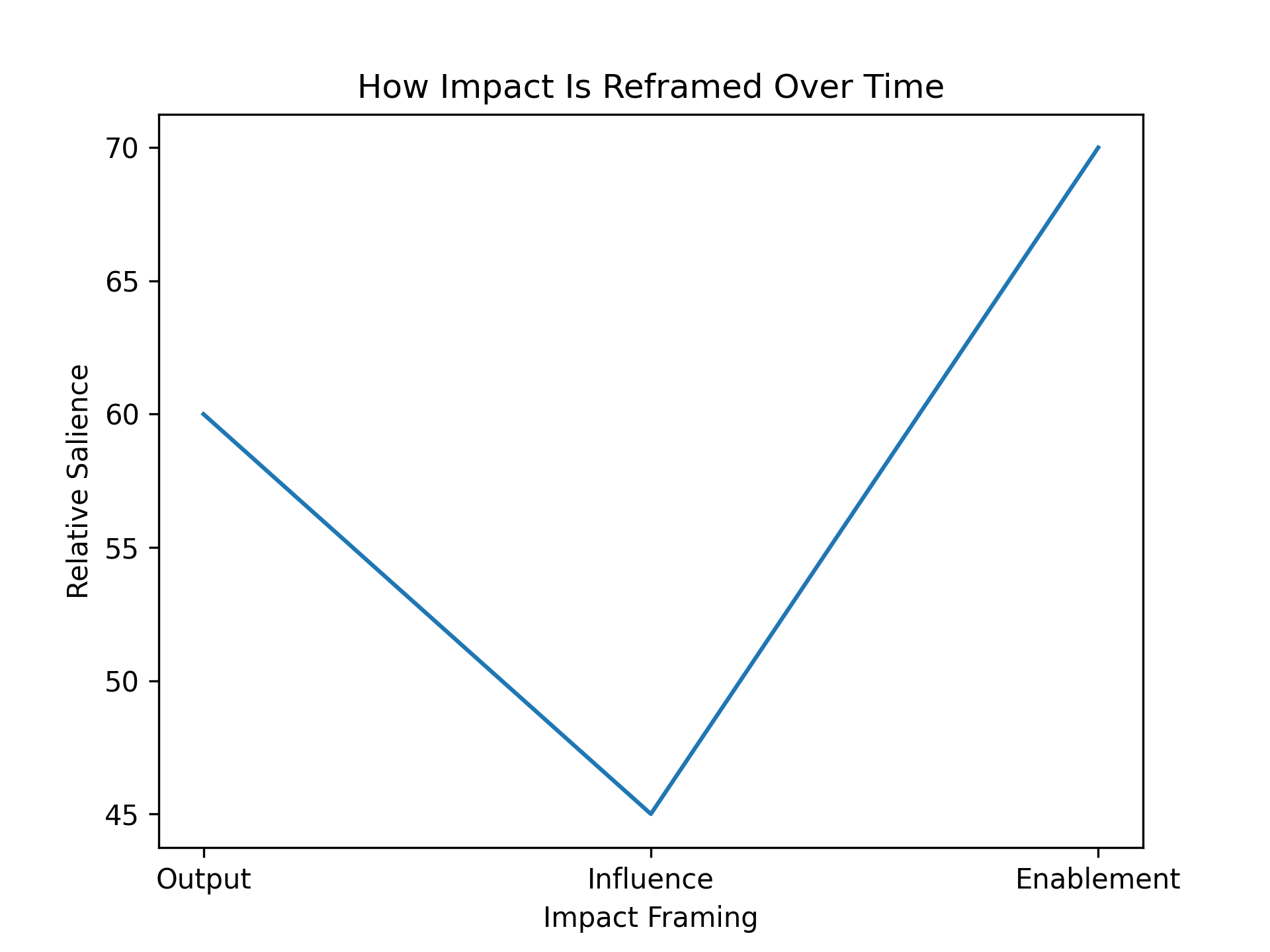
Impact gets redefined, from output to enablement, from shipping to shaping. Aspirations become directional rather than positional. Sustainability begins to matter more than scale.
These reframes are often healthy. Sometimes necessary. Sometimes wise.
But they are not neutral.
They often emerge in response to systems that cannot, or will not, support earlier definitions of success.
“I care more about the kind of problems I am solving than what my title is.”
That is a meaningful shift. For many practitioners, it is a genuinely good one.
But I wonder how often that shift happens by choice, and how often it happens because the alternative was unavailable.
If adaptation is required simply to remain effective, who is designing the system, and who is paying the price?
That question is as much a leadership one as it is a career one.
Reframing the Story We Tell Ourselves
The dominant UX career narrative tends to individualize what are actually structural dynamics.
We tell people to be braver. To advocate more. To build influence. To stay resilient.
Those skills matter. But they assume receptive systems.
What the data shows is not a failure of courage. It is a redistribution of responsibility.
29% of respondents agreed that they are burned out. When the lens widens to include meaningful career tradeoffs alongside burnout, that figure rises to 59%.
The system does not fail loudly. It fails in ways that are difficult to see. And the cost often appears years later as regret that sounds personal, but is not fully earned.
A Different Way to Read Our Careers
What if we stopped treating adaptation as proof of progress?
What if we recognized it as a signal: sometimes of growth, sometimes of compensation, sometimes of constraint?
And what if leaders took seriously the idea that careers are shaped not only by individual choices, but by how much invisible labor a system demands?
This is not a call to abandon agency. It is a call to place it more honestly.
Careers do not unfold in isolation. They unfold inside systems.
Until we build those systems with the same care we bring to our work, adaptation will continue to be mistaken for advancement. And individuals will continue absorbing costs they were never meant to carry alone.
About this study
The UX Career Reflection Study surveyed 113 UX practitioners across design, research, and leadership roles. Respondents skewed toward senior practitioners (80% with 6+ years of experience), which shapes these findings. The patterns identified here are strongest among mid-to-late career professionals and may not fully represent early-career experiences. All percentages are based on respondents who answered the relevant questions (n varies by item).
The UX Career Reflection Study is an exploratory, descriptive survey examining how UX practitioners reflect on their careers, including satisfaction, uncertainty, regret, and adaptation over time. Responses were collected via a voluntary, self-selected survey and analyzed using qualitative thematic synthesis.
A total of 113 UX practitioners participated in the study. Data collection is now closed. The sample skews toward experienced professionals, with approximately 80% reporting 6+ years of experience. Roles span individual contributors through executive leadership.
Across responses, a set of recurring career experience patterns emerged. These patterns describe common dynamics in how practitioners narrate their professional journeys, rather than representing a linear career model or universal trajectory.
Eight canonical patterns were identified through inductive synthesis and iterative consolidation. Following initial analysis at N = 87, the expanded dataset was reviewed to assess structural stability. No new canonical patterns emerged, and pattern density remained proportionally consistent, strengthening confidence that the identified dynamics reflect durable structural themes rather than cohort-specific artifacts.
This report presents:
Sample characteristics and baseline sentiment
A descriptive synthesis of recurring qualitative patterns
Observations about how respondents frame responsibility, satisfaction, and uncertainty
Interpretive reflection and meaning-making are intentionally addressed in a separate companion essay.
2. Study Purpose & Scope
The purpose of this study is to understand how UX practitioners describe and interpret their own career experiences when invited to reflect without evaluative or performance framing.
This study:
Focuses on self-reported, retrospective reflection
Surfaces recurring narrative patterns across roles and career stages
Prioritizes descriptive accuracy over generalizability
This study does not:
Represent the UX profession as a whole
Quantify population-level prevalence
Evaluate organizational performance
Prescribe career actions
3. Methodology
3.1 Data Collection
Online survey with open-ended reflection prompts and selected structured items
Voluntary, anonymous participation
Responses reflect a single time period and industry context
3.2 Sample Characteristics
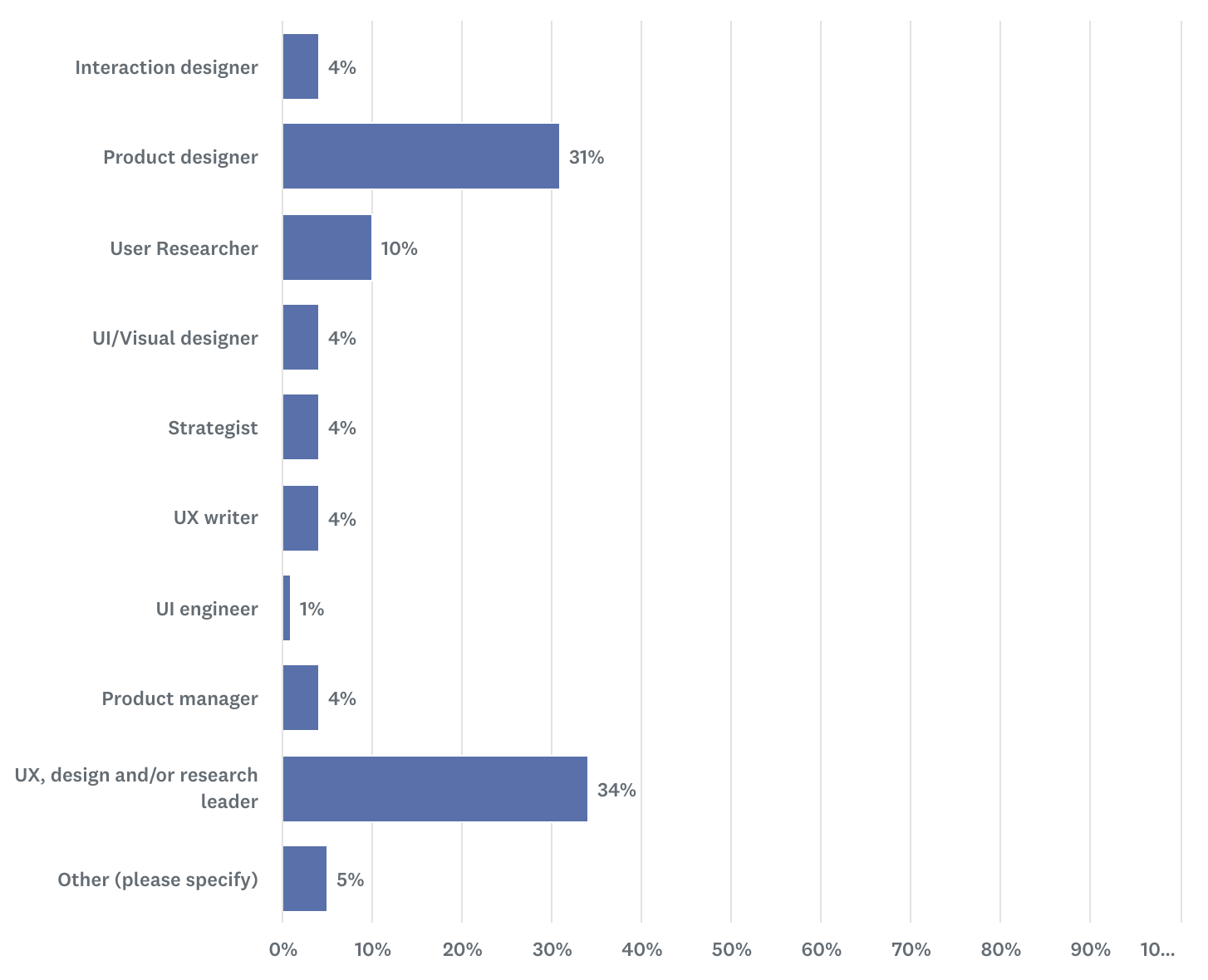
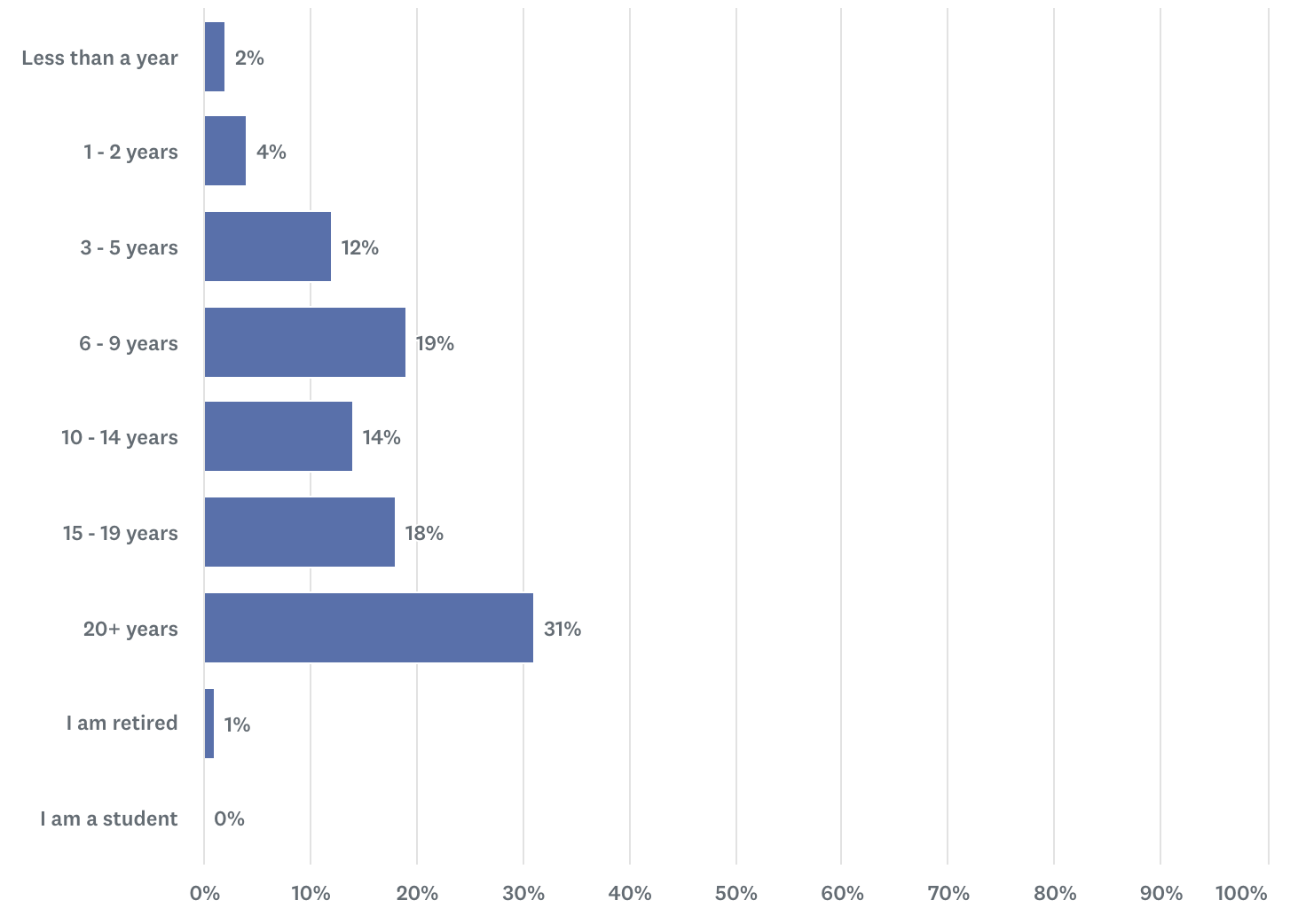
Respondents span multiple UX disciplines and career stages, providing perspectives from early- through late-career practitioners.
Visualization 1: Respondent Role Distribution
Visualization 2: Career Tenure Distribution
3.3 Analytical Approach
Responses were analyzed using an inductive qualitative synthesis process:
Initial open coding of responses
Clustering of codes into thematic groupings
Consolidation into a canonical pattern set
Iterative review for overlap, redundancy, and divergence
Patterns were retained if they appeared across multiple respondents and contexts.
3.4 Model Stability Under Dataset Expansion
Following initial synthesis at N = 87, the survey continued collecting responses, resulting in an expanded dataset of 113 total respondents (a 30% increase in sample size).
To assess structural integrity, the additional responses were analyzed against the locked canonical pattern set (A–H) using a focused delta review. The objective was not to re-code the entire dataset, but to test whether:
New recurring themes appeared at sufficient density to warrant pattern revision
Attribution framing shifted meaningfully
Collapse-oriented or terminal-decline narratives increased in frequency
Findings
No new canonical patterns emerged. The additional responses did not introduce recurring themes at sufficient density to warrant expansion of the pattern set.
Pattern density remained proportionally stable. Themes related to influence versus craft (Pattern A), visibility labor (Pattern B), reframed responsibility (Pattern C), satisfaction coexisting with uncertainty (Pattern D), and limited organizational stewardship (Pattern E) appeared at rates consistent with the original cohort.
Collapse narratives did not intensify. While a minority of earlier responses articulated existential or industry-decline framing, this signal did not expand within the later cohort.
Attribution framing remained consistent. The expanded dataset continued to show a dominant pattern of individual attribution in regret narratives, even when organizational constraints were described.
Conclusion
The canonical pattern set (A–H) remains structurally stable under dataset expansion to N = 113.
No revision to the descriptive model is warranted at this time.
This stability strengthens confidence that the identified patterns reflect durable structural dynamics rather than cohort-specific artifacts.
4. Baseline Career Satisfaction
Respondents were asked to rate their overall career satisfaction on a 1–10 scale.
Figure 3. Career Satisfaction Distribution
Overall satisfaction ratings skew toward the mid-to-high range, indicating that dissatisfaction alone does not account for the reflective tone of responses.
5. Analytical Approach
Qualitative responses were analyzed using an inductive synthesis process:
Initial open reading of responses
Identification of recurring themes and narrative structures
Consolidation into a canonical set of experience patterns
Iterative review to reduce overlap and clarify boundaries
Patterns were retained when they appeared across multiple respondents and contexts.
6. Canonical Career Experience Patterns (Descriptive)
Eight recurring patterns were identified. These patterns are not mutually exclusive and often appear together within individual narratives.
Pattern
Title
Summary
A
Craft Stops Being the Primary Lever of Impact
Respondents describe a shift from technical skill as the primary driver of success toward broader influence, relationships, and organizational context.
B
Visibility Becomes Prerequisite Labor
Visibility and self-advocacy are framed as necessary, ongoing efforts rather than automatic outcomes of good work.
C
Responsibility for Outcomes Is Reframed
Respondents frequently reflect on responsibility for career outcomes, often emphasizing personal agency even when structural constraints are described.
D
Satisfaction and Uncertainty Coexist
Many respondents express genuine satisfaction with their work while simultaneously describing uncertainty about long-term stability, relevance, or future opportunity.
E
Limited Organizational Stewardship of Career Progression
Career paths are described as non-linear and largely self-directed, with limited formal guidance or clarity.
F
The Meaning of Impact Evolves Over Time
Impact is increasingly defined in terms of influence, enablement, or system-level contribution rather than outputs alone.
G
Sustainability and Life Constraints Shape Decisions
Concerns about pace, health, balance, and long-term sustainability appear across responses, influencing career decisions.
H
Aspirations Become Directional Rather Than Positional
Future goals are often framed around values, domains, or ways of working rather than specific titles.
Pattern A: Craft Stops Being the Primary Lever of Impact
Pattern Statement Respondents describe a shift from early expectations that technical craft alone would drive career success toward a recognition that influence, relationships, and organizational context play a determining role in career progression.
Evidence Summary Across responses, participants reflect on investing heavily in skill mastery early in their careers, only to later encounter limits to how far craft alone could carry them. Over time, success is increasingly framed as dependent on social, political, or organizational dynamics rather than output quality alone.
Key Supporting Data Points
This pattern appears across career stages, often described retrospectively rather than as a real-time realization.
Pattern A frequently co-occurs with Pattern B (Visibility Becomes Prerequisite Labor).
“I spent years focusing on getting better at the work, assuming that would naturally lead to more influence. Eventually I realized that skill alone wasn’t what determined whether I had a seat at the table.”
Pattern B: Visibility Becomes Prerequisite Labor
Pattern Statement Respondents frequently contrast early assumptions that high-quality work would naturally be recognized with later experiences in which visibility and self-advocacy are described as necessary, ongoing forms of labor.
Evidence Summary Across responses, participants describe learning—often retrospectively—that career progression depended not only on producing strong work but on actively communicating, framing, and advocating for that work within organizational contexts. Visibility is framed less as an outcome of excellence and more as a parallel responsibility.
Key Supporting Data Points
Regret narratives referencing “not speaking up” or “assuming work would speak for itself” appear across early-, mid-, and late-career respondents.
This pattern frequently co-occurs with Pattern A (Craft Stops Being the Primary Lever of Impact).
“I assumed that doing good work would be enough. It took me a long time to understand that if I didn’t advocate for myself and my work, it often went unseen.”
Pattern C: Responsibility for Outcomes Is Reframed
Pattern Statement Respondents frequently describe career outcomes through a lens of personal responsibility, even in narratives that also reference organizational or structural constraints.
Evidence Summary Across responses, participants often emphasize what they personally “should have done differently,” even when describing unclear expectations, limited opportunity, or organizational instability. Responsibility is reframed inward rather than transferred outward.
Key Supporting Data Points
Individual attribution appears even in responses that explicitly name systemic or managerial barriers.
This framing is present across roles and career stages.
“Looking back, I can see how the organization made things difficult, but I still think about what I could have done differently to change the outcome.”
Pattern D: Satisfaction and Uncertainty Coexist
Pattern Statement Many respondents report high levels of satisfaction with their current work while simultaneously expressing uncertainty about long-term stability, relevance, or future opportunity.
Evidence Summary Rather than dissatisfaction driving concern, respondents often describe enjoying their work while questioning whether external conditions—such as industry volatility or shifting role expectations—will continue to support it.
Key Supporting Data Points
High satisfaction ratings appear alongside open-ended responses expressing concern about future security or relevance.
This pattern appears across tenure bands, not solely among early-career respondents.
“I genuinely like what I do and feel proud of my work, but I’m not confident that the role or the industry will look the same in a few years.”
Pattern E: Limited Organizational Stewardship of Career Progression
Pattern Statement Respondents frequently describe career progression as self-directed rather than guided by clear or consistent organizational pathways.
Evidence Summary Participants recount navigating advancement through individual moves, lateral shifts, or external opportunities, often noting limited visibility into expectations, criteria, or long-term growth within organizations.
Key Supporting Data Points
Career narratives emphasize personal navigation rather than formal development structures.
This pattern is expressed across organizations and role types.
“Most of my career moves came from figuring things out on my own. There was never a clear path or guidance about what progression was supposed to look like.”
Pattern F: The Meaning of Impact Evolves Over Time
Pattern Statement Respondents describe redefining impact over time, shifting from output-focused measures toward influence, enablement, or system-level contribution.
Evidence Summary As roles evolve, participants place less emphasis on individual deliverables and more on shaping decisions, supporting others, or improving systems. This reframing often accompanies changes in seniority or scope.
Key Supporting Data Points
This shift appears most clearly in mid- to late-career narratives.
Pattern F frequently co-occurs with Pattern A and Pattern H.
“Earlier in my career, impact meant what I personally produced. Now it’s more about whether I’m influencing better decisions or helping others do their best work.”
Pattern G: Sustainability and Life Constraints Shape Decisions
Pattern Statement Respondents increasingly reference health, pace, balance, and life constraints as active factors shaping career decisions.
Evidence Summary Participants describe reassessing previously assumed trajectories of continuous growth or acceleration in light of burnout, family needs, or long-term sustainability concerns. These considerations are framed as practical limits rather than temporary setbacks.
Key Supporting Data Points
Sustainability concerns appear across career stages, not only in late-career responses.
These constraints often influence role changes or shifts in ambition.
“I realized that the pace I was pushing for wasn’t sustainable long-term, and that forced me to rethink what kind of career I actually wanted.”
Pattern H: Aspirations Become Directional Rather Than Positional
Pattern Statement When describing future goals, respondents more often emphasize values, domains, or ways of working rather than specific titles or hierarchical advancement.
Evidence Summary Participants articulate aspirations in terms of alignment, meaning, or type of contribution, often moving away from role- or title-based definitions of success.
Key Supporting Data Points
Directional aspirations appear across tenure levels but are especially common in later-career narratives.
This pattern frequently aligns with Pattern F (Evolving Impact).
Illustrative Quote
“I’m less focused on a specific title now and more on doing work that feels aligned with my values and how I want to live.”
7. Regret, Attribution, and Uncertainty (Narrative Synthesis)
Several dynamics surfaced consistently in the qualitative responses. Given their interpretive nature, these are described narratively rather than represented quantitatively.
Regret is frequently framed around delayed action, unrealized advocacy, or lessons learned over time.
Responsibility for outcomes is often framed at the individual level, even when organizational constraints are acknowledged.
Uncertainty about the future appears alongside satisfaction, rather than replacing it.
These dynamics cut across roles and career stages and inform multiple patterns above.
8. Limitations
Self-selection bias: respondents opted in and may be more reflective than average
Retrospective framing: responses reflect hindsight rather than real-time experience
Temporal specificity: findings reflect a particular industry moment
Qualitative emphasis: findings are descriptive, not generalizable
9. Conclusion
This study identifies recurring patterns in how UX practitioners describe their careers. These patterns highlight shared experiences, tensions, and adaptations without implying uniform trajectories or outcomes. With data collection now closed at N = 113 and no structural shifts observed during expansion, the findings reflect a stable descriptive model of how UX careers are currently experienced and narrated within contemporary technology contexts.
Interpretive reflection on the meaning of these patterns is intentionally addressed in a separate companion piece.
Appendix
Appendix A: Survey data
Appendix: External Research Context
B: Five-Domain Triangulation Framework
C: Community Systems as Secondary Career Infrastructure
Appendix A: Survey Data
TBD
Appendix B: External Research Context — Five-Domain Triangulation Framework
Purpose and Scope
This appendix provides the external research context used to interpret patterns in the UX Career Reflection Study. It is not a literature review and does not serve as validation or causal proof. The primary authority of this report remains the empirical patterns derived from participant responses.
The five domains outlined below function as interpretive lenses. They explain why certain themes recur across roles, tenure levels, and career stages, and they help bound what this study can—and cannot—claim.
The Five Domains
Domain 1: Career Regret, Hindsight Bias, and Misattributed Responsibility
Research on career reflection consistently shows that individuals narrate regret through personal agency, even when outcomes were heavily constrained by organizational or structural factors [Kahneman, 2011; Roese & Summerville, 2005]. This domain explains why respondents frequently frame missed opportunities, stalled growth, or lack of influence as personal shortcomings rather than systemic conditions.
This domain informs interpretation of regret, self-blame, and counterfactual language without treating those narratives as evidence of poor decision-making.
Domain 2: Non-Linear Careers and the Absence of Stewardship
Across industries, organizations now play a reduced role in guiding career progression, with internal labor markets and formal ladders weakening over time [Cappelli, 1999; Hall, 2004]. UX is a special case within this broader shift: the field largely emerged after traditional career ladders had already weakened, resulting in inconsistent role definitions, manager-dependent advancement, and self-directed career navigation.
This domain explains why practitioners experience careers as non-linear and why expectations of organizational guidance are muted or absent.
Domain 3: Invisible Labor and the Visibility Tax
When stewardship and decision clarity are limited, individuals compensate through invisible labor—translation, advocacy, alignment work, and emotional regulation—that is necessary for impact but rarely recognized or rewarded [Hochschild, 1983; Babcock et al., 2022]. In UX, this labor often becomes prerequisite to influence rather than a byproduct of strong work.
This domain explains patterns related to visibility, internalized responsibility for outcomes, and the accumulation of unseen effort.
Domain 4: Sustainability, Burnout, and Constraint
Sustained exposure to invisible labor, ambiguity, and effort–outcome mismatch leads practitioners to recalibrate ambition and redefine success. Rather than signaling disengagement, this shift reflects adaptive constraint-setting aimed at making long careers survivable under persistent uncertainty [Maslach & Leiter, 2016; World Health Organization, 2019].
This domain explains why aspirations become directional rather than positional and why satisfaction can coexist with concern about long-term viability.
Technology-sector dynamics intensify otherwise common career patterns. Persistent volatility, rapid skill churn, and automation narratives destabilize professional identity and increase perceived risk [World Economic Forum, 2023; Pew Research Center, 2023]. For UX practitioners—whose impact is often indirect and advisory—these forces amplify uncertainty and accelerate sustainability recalibration [MIT Sloan Management Review, 2023].
This domain explains why the patterns observed in this study feel especially urgent in contemporary UX and technology contexts.
How the Domains Interact
These domains are not independent variables but interacting layers. Reduced career stewardship (Domain 2) increases reliance on invisible labor (Domain 3), which in turn accelerates sustainability recalibration (Domain 4). Persistent volatility and automation narratives in tech (Domain 5) intensify these dynamics, while human hindsight bias (Domain 1) shapes how experiences are retrospectively narrated.
Together, the five domains provide contextual grounding for the study’s findings without substituting for the empirical evidence itself.
Relationship to Other Appendices
Appendix placement note: Appendix A is reserved for survey data visualizations. The triangulation framework is therefore presented here as Appendix B.
Appendix C extends this framework by examining professional community evolution as a secondary career infrastructure intersecting most directly with Domains 2 and 3.
Appendix C: External Research Context — Community Systems as Secondary Career Infrastructure
Purpose and Scope
This appendix situates the UX Career Reflection Study within a broader body of research on professional communities and career infrastructure. Its purpose is contextual grounding, not validation or causal proof. The primary authority of this report remains the empirical patterns derived from participant responses.
This appendix should be read in conjunction with Appendix B, which outlines the five-domain triangulation framework.
Historical Baseline: Early UX Community Stewardship Gaps
Research on UX communities as early as 2012 identified structural fragility in how the field organized itself outside formal institutions [Miliano, 2012]. At that time, UX communities were largely place-based, volunteer-run, and dependent on unpaid labor. They provided learning, identity, and belonging, but lacked durable governance, shared accountability, and institutional support.
This work should be understood as a baseline diagnosis of a stewardship gap, not as a verdict on the long-term viability of UX communities.
Community Evolution After 2012
Over the subsequent decade, UX communities did not disappear. They reconfigured.
Empirical research on digital and platform-mediated communities shows a shift toward distributed, online-first participation and individual-led knowledge networks [Wenger, 1998; Baym, 2015]. Within UX specifically, community participation increasingly moved:
From geographic meetups to platform-mediated networks
From collective identity to individual thought-leader gravity
From shared learning spaces to visibility- and career-oriented participation
From informal belonging to instrumental engagement
These changes represent real evolution in form. What did not evolve at the same pace was the underlying responsibility structure.
The medium evolved. The stewardship model did not.
Communities scaled connection and distribution without becoming durable institutions capable of absorbing career risk, providing progression clarity, or offering long-term professional containment.
Second-Order Signals from the UX Career Reflection Study
The UX Career Reflection Study does not directly measure community participation or community health. However, strong second-order signals emerge in career narratives that are consistent with long-standing community stewardship gaps [Miliano, 2012].
Across responses, practitioners:
Do not expect organizations or communities to steward their growth
Experience visibility and participation as prerequisite labor rather than belonging
Internalize systemic constraints as personal shortcomings
Treat community engagement as instrumental rather than stabilizing
Locate mentorship, teaching, and meaning-making at the margins rather than in formal structures
These patterns suggest that the absence of durable community stewardship has downstream effects on how careers are experienced and narrated.
Relationship to the Five-Domain Framework
Community evolution intersects most directly with:
Domain 2 (Non-Linear Careers & Absence of Stewardship): UX communities did not develop into stable career-guiding institutions as organizational ladders weakened [Hall, 2004; Cappelli, 1999].
Domain 3 (Invisible Labor & Visibility Tax): As neither organizations nor communities reliably steward careers, individuals absorb the labor of self-advocacy, legitimacy-building, and meaning-making [Hochschild, 1983; Babcock et al., 2022].
Rather than functioning as a separate explanatory domain, community systems operate as a missing middle layer—a structure that adapted in form but did not evolve into a stabilizing institutional counterweight.
Interpretive Boundary
This appendix does not claim that UX communities failed, nor does it argue that community participation should replace organizational responsibility. Instead, it clarifies a structural condition:
UX practitioners adapted faster than the institutions—organizational or communal—designed to support them.
The unresolved gap between adaptation and stewardship helps explain why many career experiences described in this study are characterized by self-direction, invisible labor, and internally borne uncertainty.
When we asked you to reflect on your career, we weren’t looking for advice or best practices.
We were trying to understand something quieter: how UX careers actually feel as they unfold.
This write-up is not a summary of findings in academic language. It’s a walk-through—meant to help you see what others said, how it fits together, and where you are not alone.
How We Looked at What You Shared
We read responses multiple times, looking less at what people recommended and more at:
moments of surprise or disillusionment
language around regret and responsibility
how people described impact over time
where uncertainty showed up—even alongside satisfaction
Rather than grouping responses by job title or years of experience, we grouped them by shared realizations—the kinds of thoughts people have when expectations meet reality.
That’s how the patterns below emerged.
1. “Good Work Will Speak for Itself” — Until It Doesn’t
One of the earliest and most common realizations people described was this:
You can do excellent work—and still not shape outcomes.
Many respondents talked about a moment when they realized that rigor, craft, or strong research alone didn’t reliably influence decisions.
“Early on I thought being good at the work was enough, but I learned that influencing decisions mattered more.”
“They agreed with the research—and then did something else.”
What this reflects
This wasn’t about skill gaps. It was about exposure to how decisions actually get made.
2. When Visibility Becomes Part of the Job
Alongside that realization, many people described learning that work often has to be actively narrated to count.
Several respondents expressed regret about waiting to be noticed or assuming impact would be obvious.
“I should have spoken up more about what I wanted instead of waiting for permission.”
“The biggest driver of my career has been the choices I made and the risks I was willing to take.”
What stood out wasn’t a lack of confidence. It was how rarely visibility was optional.
For many, self-advocacy became a second job layered onto the first.
Often required, rarely acknowledged
3. Where Responsibility Quietly Lands
When people talked about regret or frustration, the language was strikingly consistent.
Even when describing unclear roles, missing career paths, or leadership churn, the conclusion often sounded personal.
“I should have left sooner.” “I wasn’t strategic enough.” “I didn’t advocate for myself early on.”
Organizational issues were usually described softly or indirectly.
“There wasn’t a clear path.” “Leadership priorities shifted.”
What this tells us
Many practitioners absorb systemic ambiguity as personal responsibility—often without realizing it.
No judgment. Just contrast.
4. Satisfaction and Uncertainty Living Side by Side
Another pattern appeared repeatedly: coexistence.
Many respondents reported being genuinely satisfied with their work or teams—while also expressing uncertainty about the future.
“The work itself is interesting, and the team is great.”
“I’m satisfied regarding pay and life—but not about where the field is heading.”
Enjoyment and unease weren’t opposites in these responses. They were companions.
High satisfaction does not eliminate uncertainty
5. How Impact Gets Reframed Over Time
For many respondents—especially later in their careers—the definition of impact shifted.
Less emphasis on:
volume of artifacts
titles
being in every decision
More emphasis on:
enabling others
shaping direction
doing work that feels sustainable
“My job is less about producing artifacts now and more about guiding direction and getting alignment.”
“I care more about what sticks than what ships.”
This shift wasn’t always framed as a win. Sometimes it felt like a necessary adjustment to clearer constraints.
6. Health, Sustainability, and the Quiet Tradeoffs
Some respondents spoke directly about health, stress, and sustainability shaping their choices.
“Continue doing cool work, but make it more sustainable.”
“Striking the right balance of effectiveness without too much stress.”
These comments rarely appeared as demands. They appeared as careful recalibrations.
What This Walk-Through Is — and Is Not
This is not:
a career playbook
a maturity model
a prescription for what you should do next
It’s an attempt to reflect back what you collectively described—so it doesn’t live only as private self-assessment.
If there’s a single thread running through these responses, it’s this:
UX careers are sustained by far more adaptation than most people realize—and much of that adaptation happens quietly, without being named or shared.
Seeing that doesn’t solve everything. But it can change where responsibility lands.
A Closing Thought
If you recognized yourself in any of this, you weren’t misreading your experience.
Over the last year, AI-enabled design tools have meaningfully changed how quickly teams can produce artifacts. We can generate flows, screens, variants, and prototypes at a pace that would have been unthinkable even eighteen months ago. That progress is real—and worth celebrating.
But speed, on its own, is not a strategy.
What I’m seeing in executive conversations is genuine excitement about velocity, paired with a lack of precision about what kind of speed we’re actually buying. Most AI enthusiasm today is enthusiasm for production acceleration—how fast teams can make things. The harder question is whether that production speed is translating into decision speed—faster, better decisions grounded in user reality.
Those two are not the same.
Production speed reduces the cost of making artifacts. Decision speed reduces uncertainty at the moment choices are made. One improves throughput. The other improves outcomes. Confusing them creates a subtle but expensive risk: teams feel confident sooner without actually being more correct.
There’s an unspoken assumption embedded in many AI conversations: Faster making → faster iterating → better outcomes.
What’s missing from that loop is the actor.
When we say “iterate faster,” who are we iterating with—users, or ourselves?
AI dramatically increases internal velocity: how quickly teams align, revise, and move ideas forward inside the building. What it does not automatically increase is external learning: how quickly assumptions are validated with real customers, in real contexts, with real consequences.
That gap matters. Internal velocity without external learning doesn’t create insight—it creates rehearsal. Teams move quickly, confidently, and coherently…in directions that may or may not map to reality.
This gap between internal velocity and external learning shows up wherever an organization depends on functions that carry signal from outside the building—UX, customer success, sales, support, research. These roles exist precisely to create grip: the connection to reality that keeps speed from becoming drift. I’ve spent twenty-five years on the UX side of this equation, and the pattern is consistent. When production timelines compress, the functions that slow down to listen get pressure to speed up and match. But that’s a category error. Their value isn’t in keeping pace—it’s in keeping contact.
Which raises the real question: AI is a force multiplier—but what are we multiplying? Insight, or opinion?
If AI is accelerating decisions that are grounded in validated user understanding, that’s leverage. If it’s accelerating decisions that haven’t been tested outside the room, that’s confidence debt. And confidence debt, like technical debt, always comes due—just at a less convenient time. I’ve seen this pattern across fintech, insurance, and enterprise software: teams ship in half the time, celebrate the velocity, then spend three quarters untangling assumptions that were never tested. The rework isn’t dramatic—it’s quiet. A feature that doesn’t get adopted. A flow that requires constant support intervention. A roadmap that keeps revisiting the same problem because it was never actually solved.
There’s a simple diagnostic leaders can apply immediately: If an iteration loop doesn’t include a real user signal, we’re not iterating—we’re rehearsing.
For any AI-accelerated design work, we should be able to answer three questions:
What assumption are we testing?
Who outside this room can confirm or refute it?
How quickly will that signal come back?
Those aren’t UX questions. They’re governance questions. When AI compresses production timelines, the assumptions embedded in what we’re building get locked in faster. That makes the decision about when and how we validate a strategic choice, not a research preference. Who owns that decision—and how it’s resourced—is a leadership accountability, not a team-level workflow issue.
AI has made us incredibly fast at moving inside the organization. The opportunity—and responsibility—now is to ensure we’re equally fast at moving toward reality. When speed is paired with learning, AI pays off. When it isn’t, it just helps us get confidently wrong sooner.
I’ve spent twenty-five years leading UX across fintech, cybersecurity, enterprise software, and insurance tech. And I keep seeing the same pattern: good UX work—solid research, thoughtful design, real effort—fails to shape decisions in meaningful ways.
It’s not because the work is bad. It’s because most organizations aren’t ready for what the work asks of them.
I’ve watched teams genuinely invest in discovery, engage in design exploration, even agree with what they’re seeing—only to quietly move forward with the original plan anyway. Not because they don’t care. Not because they don’t “get UX.” But because uncertainty is uncomfortable, and most organizations are built to resolve discomfort quickly.
When UX work creates tension—between speed and rigor, roadmap and reality—what I usually see isn’t outright rejection. It’s erosion. Insight gets acknowledged but softened. Design intent gets diluted. Decisions get reframed as “pragmatic” when they’re really just familiar.
Early in my career, I thought the answer was more research. Clearer artifacts. More “actionable” deliverables. I’ve learned that volume isn’t the issue. Capacity is.
Capacity to sit with ambiguity. Capacity to question assumptions without panicking. Capacity to let understanding actually change direction.
You can see the breakdowns when that capacity isn’t there:
Research lives in decks, not in decisions
Design intent makes sense in concept but falls apart in delivery
Teams want solutions before they’ve aligned on the problem
Those aren’t process failures. They’re human ones.
Organizations, like people, develop coping mechanisms under pressure. Metrics, velocity, and quick decisions start to feel safer than slowing down to think. Certainty becomes more comfortable than clarity.
What I’ve learned works differently
UX doesn’t need to fight harder to be heard. UX needs to function as infrastructure, not output.
I think about it as three connected capabilities:
Understanding is where we listen—really listen—to what’s true for users, even when it’s inconvenient. Research surfaces patterns, tensions, and signals we might prefer not to see. This breaks down when teams hear insights but aren’t ready to sit with them.
Interpretation is where understanding becomes shared meaning. Design frames the problem, makes tradeoffs visible, and turns insight into intent. This breaks down when we rush to solutions before unresolved questions are actually resolved.
Follow-through is the hardest part. It’s about protecting intent when pressure arrives—deadlines, scope, competing priorities. This is where leadership matters most. When stress rises, meaning either holds or dissolves.
UX rarely breaks at handoffs. It breaks at sense-making gaps—when research is acknowledged but not integrated, when design is appreciated but not protected, when delivery optimizes speed over understanding.
The real work
The organizations I’ve seen do this well share one thing: leadership willing to tolerate discomfort long enough for insight to become understanding.
UX maturity isn’t about process sophistication or headcount. It’s an organization’s ability to make meaning together—without panic, ego, or false certainty.
That’s not a tooling problem. It’s a leadership one.
And after twenty-five years, I’m more convinced than ever that building that capacity is the actual work.
Happy times are coming our way…We are so grateful for all who are traveling to help Miriam celebrate. We’ve included details on the weekend activities below. Look forward to seeing everyone!