
What We Heard When We Stepped Back and Listened
Why We’re Sharing This Back
When we asked you to reflect on your career, we weren’t looking for advice or best practices.
We were trying to understand something quieter:
how UX careers actually feel as they unfold.
This write-up is not a summary of findings in academic language.
It’s a walk-through—meant to help you see what others said, how it fits together, and where you are not alone.
How We Looked at What You Shared
We read responses multiple times, looking less at what people recommended and more at:
- moments of surprise or disillusionment
- language around regret and responsibility
- how people described impact over time
- where uncertainty showed up—even alongside satisfaction
Rather than grouping responses by job title or years of experience, we grouped them by shared realizations—the kinds of thoughts people have when expectations meet reality.
That’s how the patterns below emerged.
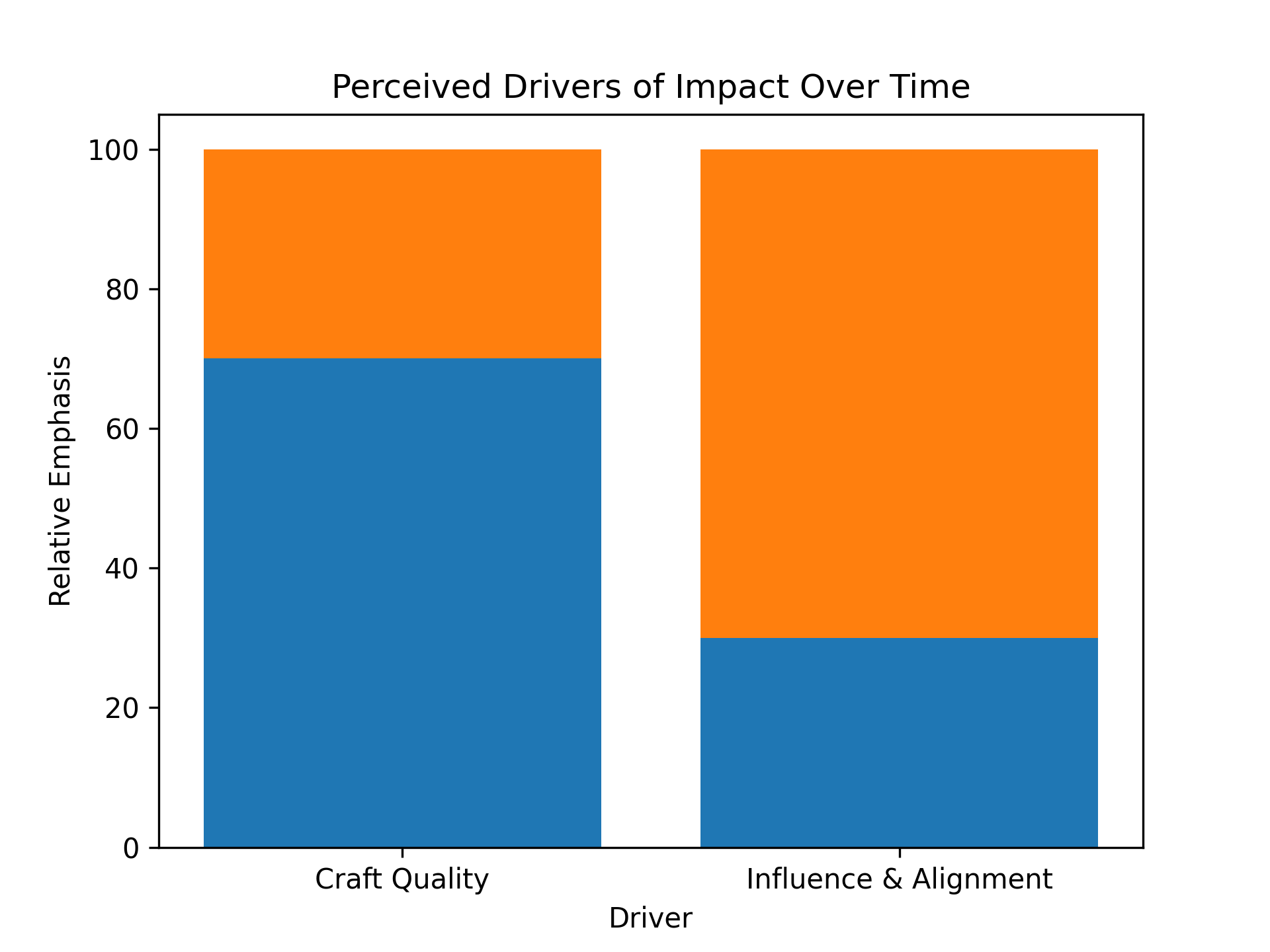
1. “Good Work Will Speak for Itself” — Until It Doesn’t
One of the earliest and most common realizations people described was this:
You can do excellent work—and still not shape outcomes.
Many respondents talked about a moment when they realized that rigor, craft, or strong research alone didn’t reliably influence decisions.
“Early on I thought being good at the work was enough, but I learned that influencing decisions mattered more.”
“They agreed with the research—and then did something else.”
What this reflects
This wasn’t about skill gaps.
It was about exposure to how decisions actually get made.
2. When Visibility Becomes Part of the Job
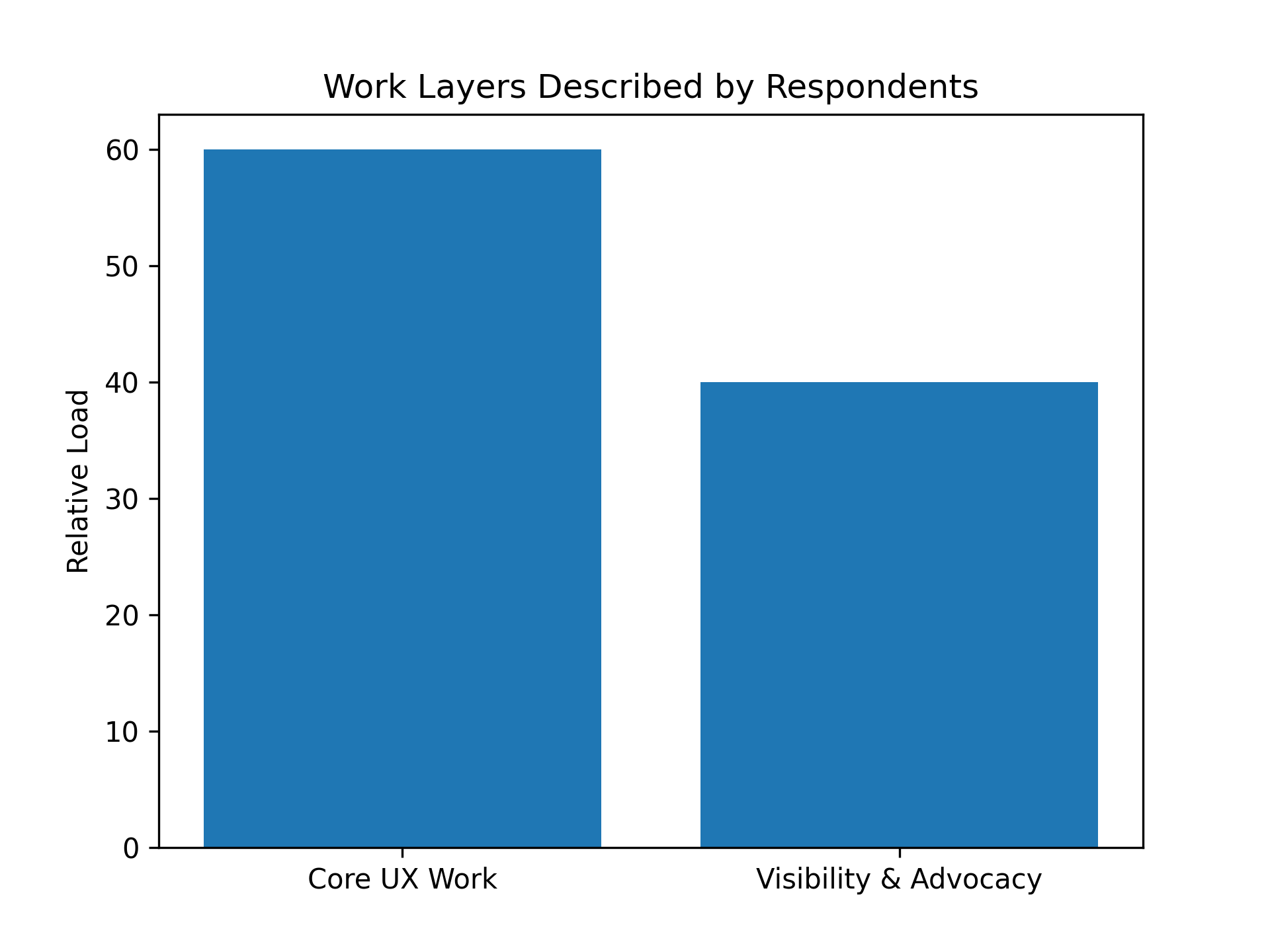
Alongside that realization, many people described learning that work often has to be actively narrated to count.
Several respondents expressed regret about waiting to be noticed or assuming impact would be obvious.
“I should have spoken up more about what I wanted instead of waiting for permission.”
“The biggest driver of my career has been the choices I made and the risks I was willing to take.”
What stood out wasn’t a lack of confidence.
It was how rarely visibility was optional.
For many, self-advocacy became a second job layered onto the first.
Often required, rarely acknowledged
3. Where Responsibility Quietly Lands
When people talked about regret or frustration, the language was strikingly consistent.
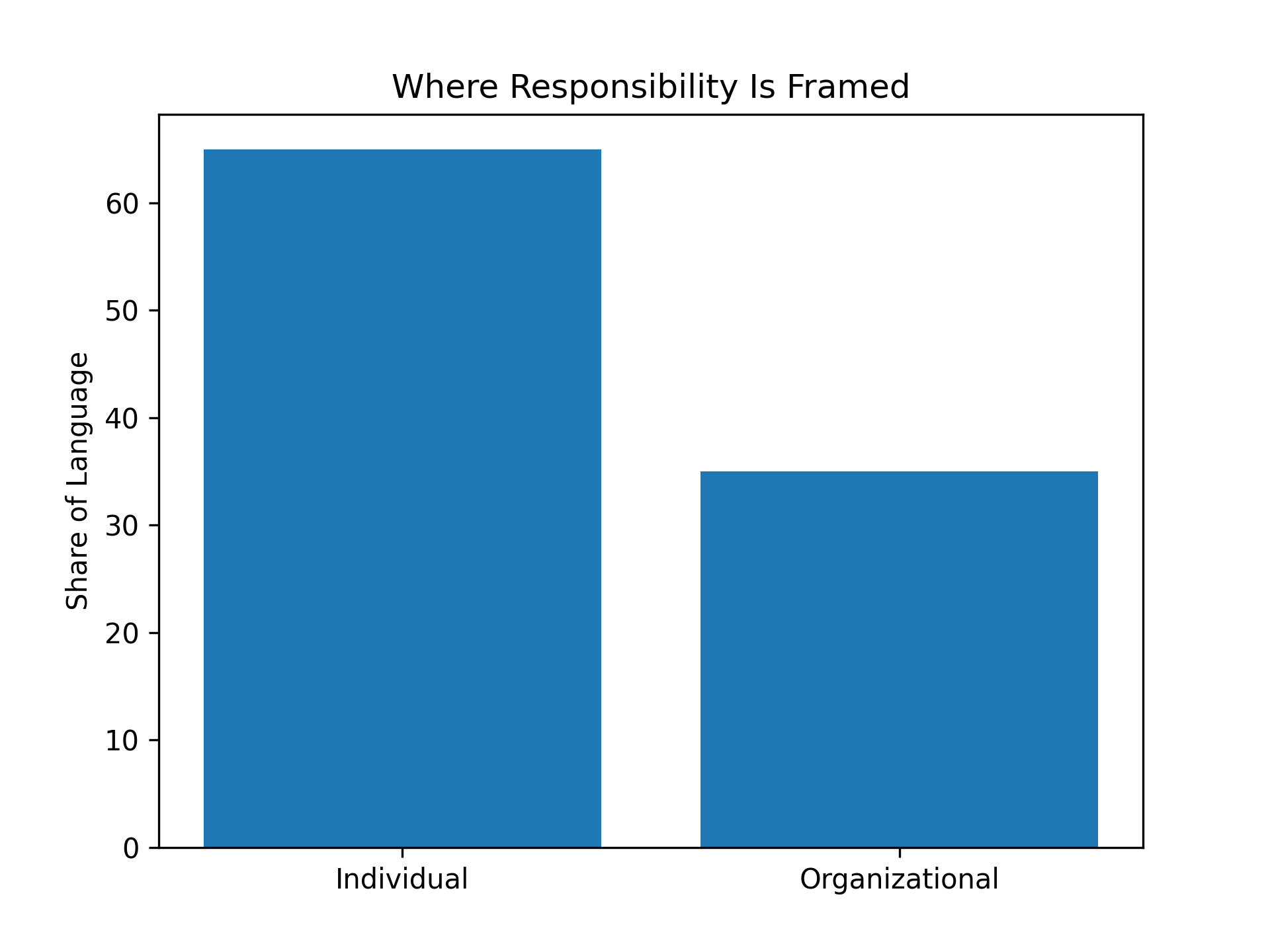
Even when describing unclear roles, missing career paths, or leadership churn, the conclusion often sounded personal.
“I should have left sooner.”
“I wasn’t strategic enough.”
“I didn’t advocate for myself early on.”
Organizational issues were usually described softly or indirectly.
“There wasn’t a clear path.”
“Leadership priorities shifted.”What this tells us
Many practitioners absorb systemic ambiguity as personal responsibility—often without realizing it.
No judgment. Just contrast.
4. Satisfaction and Uncertainty Living Side by Side
Another pattern appeared repeatedly: coexistence.
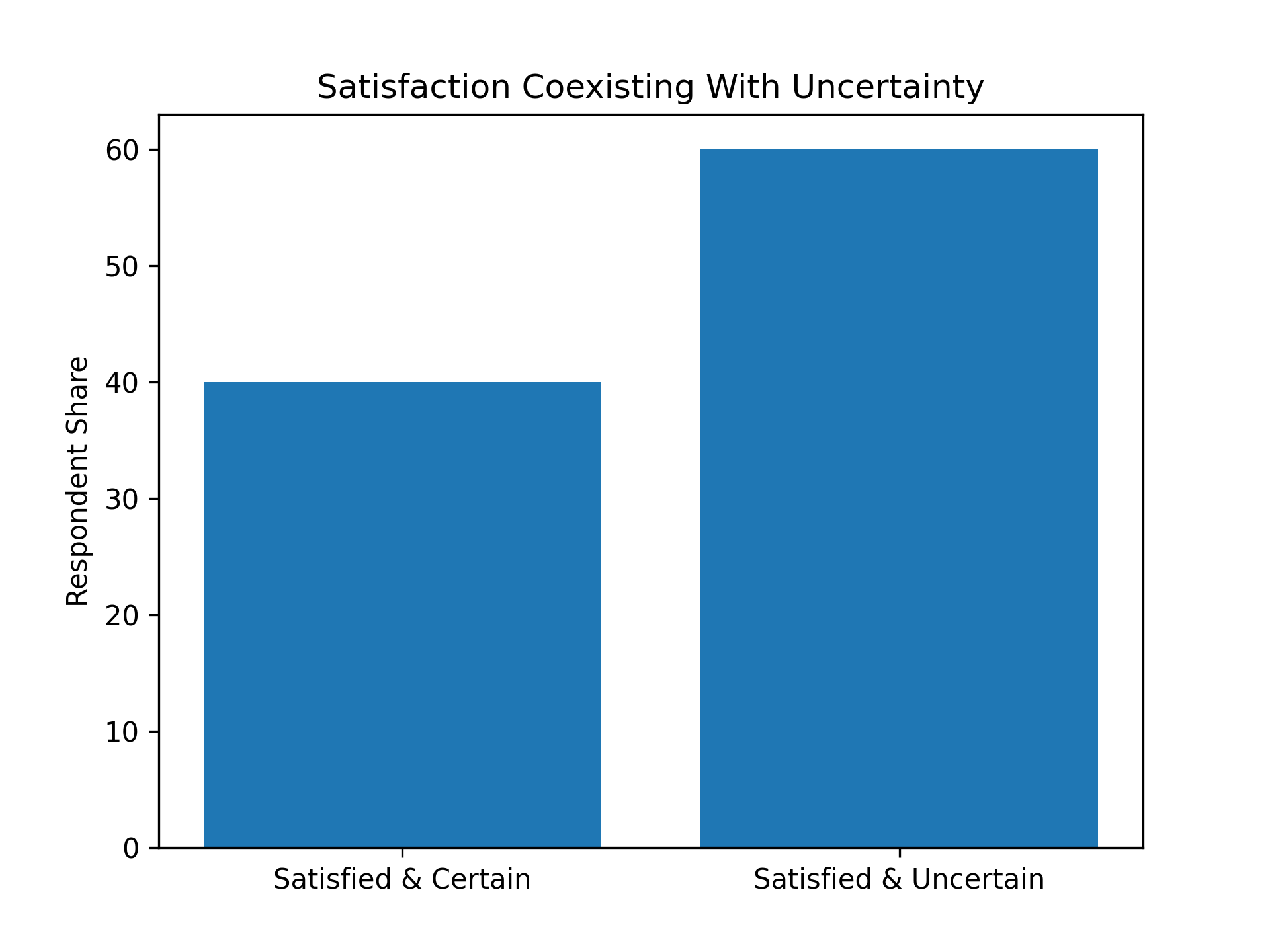
Many respondents reported being genuinely satisfied with their work or teams—while also expressing uncertainty about the future.
“The work itself is interesting, and the team is great.”
“I’m satisfied regarding pay and life—but not about where the field is heading.”
Enjoyment and unease weren’t opposites in these responses.
They were companions.
High satisfaction does not eliminate uncertainty
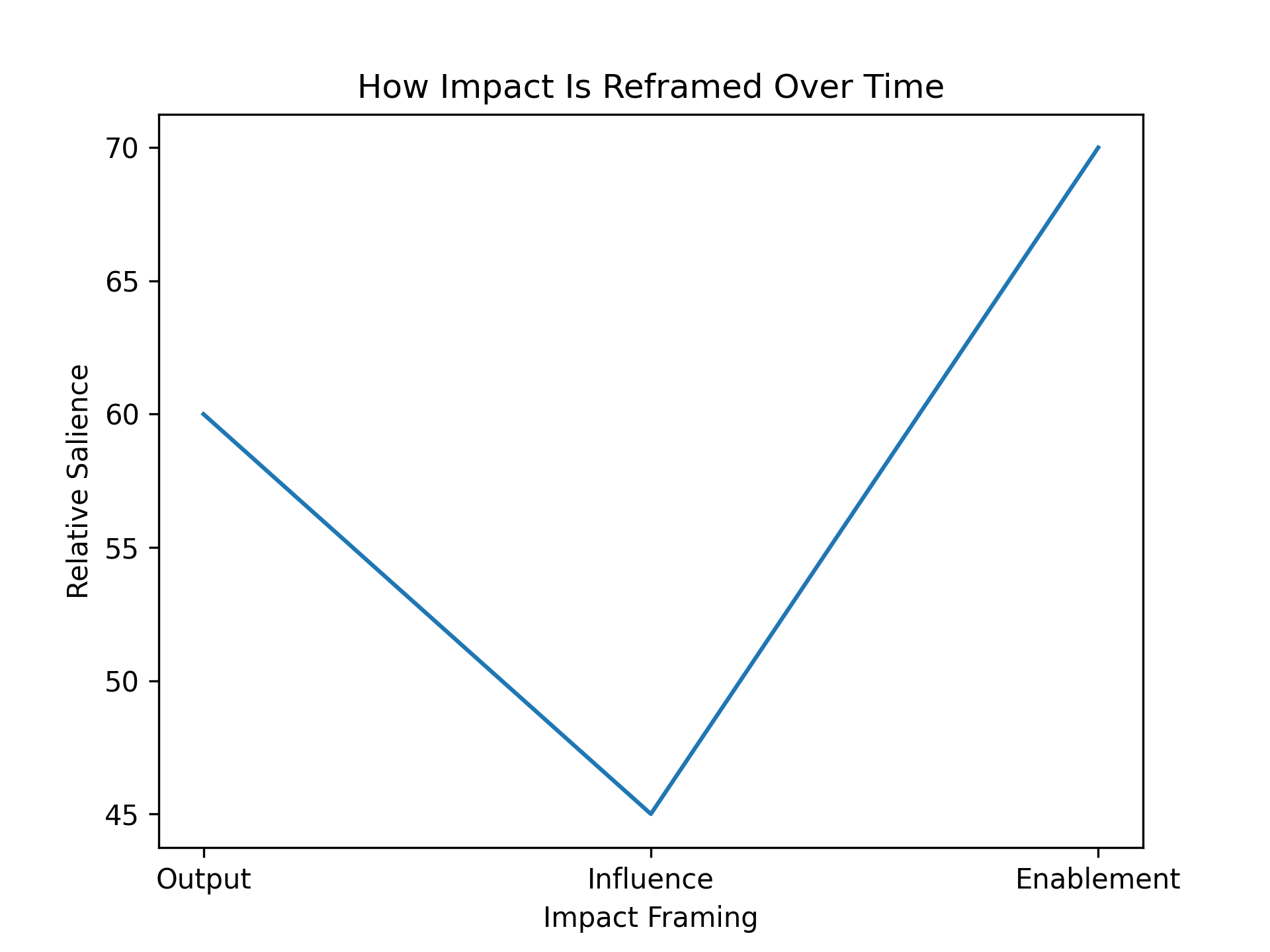
5. How Impact Gets Reframed Over Time
For many respondents—especially later in their careers—the definition of impact shifted.
Less emphasis on:
- volume of artifacts
- titles
- being in every decision
More emphasis on:
- enabling others
- shaping direction
- doing work that feels sustainable
“My job is less about producing artifacts now and more about guiding direction and getting alignment.”
“I care more about what sticks than what ships.”
This shift wasn’t always framed as a win.
Sometimes it felt like a necessary adjustment to clearer constraints.
6. Health, Sustainability, and the Quiet Tradeoffs
Some respondents spoke directly about health, stress, and sustainability shaping their choices.
“Continue doing cool work, but make it more sustainable.”
“Striking the right balance of effectiveness without too much stress.”
These comments rarely appeared as demands.
They appeared as careful recalibrations.
What This Walk-Through Is — and Is Not
This is not:
- a career playbook
- a maturity model
- a prescription for what you should do next
It’s an attempt to reflect back what you collectively described—so it doesn’t live only as private self-assessment.
If there’s a single thread running through these responses, it’s this:
UX careers are sustained by far more adaptation than most people realize—and much of that adaptation happens quietly, without being named or shared.
Seeing that doesn’t solve everything.
But it can change where responsibility lands.
A Closing Thought
If you recognized yourself in any of this, you weren’t misreading your experience.
You were noticing something real.
And you weren’t the only one.
Let’s talk about it. Together.